
 EN
EN
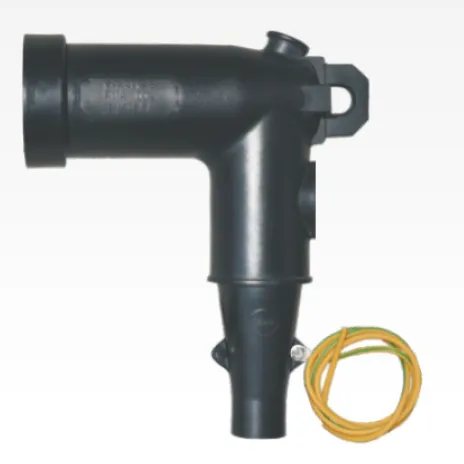
American-style cable accessories are engineered to comply with two of the most rigorous electrical standards in North America: ANSI and IEEE. These standards define the performance, safety, and dimensional requirements that cable accessories must satisfy before entering service in utility, industrial, and commercial power systems. Understanding how these requirements shape the design and testing of cable accessories is essential for engineers, procurement specialists, and facility managers who specify components for medium-voltage networks.
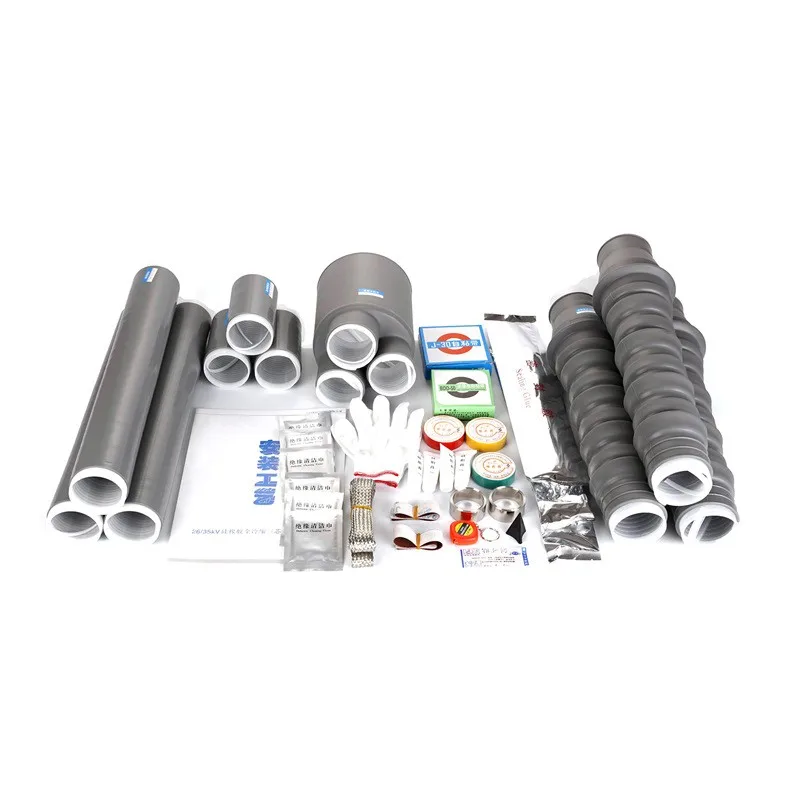
When cable accessories fail in the field, the consequences extend far beyond a tripped breaker. Unplanned outages, arc flash events, and costly infrastructure repairs result from cable accessories that do not meet the correct standards. This article explains how American-style cable accessories are designed, tested, and validated against ANSI and IEEE requirements, and why that compliance framework makes them the preferred choice for demanding power distribution environments.
The Role of ANSI and IEEE in Defining Cable Accessories
How ANSI Sets the Framework for Cable Accessories
ANSI, the American National Standards Institute, establishes the dimensional and performance benchmarks that cable accessories must meet to be interchangeable across different manufacturers and installation contexts. For medium-voltage cable accessories, ANSI standards specify interface geometry, insulation class ratings, and environmental sealing requirements. These parameters ensure that cable accessories from different suppliers can mate correctly with connectors, switchgear, and transformer terminations without modification. The standardized approach reduces installation errors and simplifies procurement for large infrastructure projects.
ANSI compliance also governs the voltage class designations that cable accessories carry. Cable accessories rated at 15 kV, 25 kV, or 35 kV must pass defined dielectric withstand and impulse tests before receiving their classification. This voltage-class system gives engineers a reliable way to specify cable accessories that match the insulation level of the cable system they are protecting.
How IEEE Standards Govern Cable Accessories Testing
IEEE, the Institute of Electrical and Electronics Engineers, publishes detailed test standards that cable accessories must pass to demonstrate long-term reliability. IEEE 48 covers the performance requirements for cable accessories used on shielded power cables rated from 2.5 kV to 500 kV. Under IEEE 48, cable accessories must undergo AC voltage tests, partial discharge measurements, and thermal cycling evaluations to confirm that the insulation system remains intact under real service conditions. Cable accessories that pass IEEE 48 testing are considered suitable for permanent installation in grid infrastructure.
IEEE 404 extends the testing scope by addressing splices and terminations as complete cable accessories assemblies. This standard evaluates how cable accessories perform when fully assembled in the field, accounting for the interface between the cable insulation and the accessory body. The emphasis on assembly-level performance distinguishes IEEE 404 from component-only tests and makes it especially relevant for cold shrink cable accessories, which rely on a consistent interface pressure to maintain insulation integrity.
Design Features That Help Cable Accessories Meet ANSI and IEEE Requirements
Silicone Rubber Insulation in Cable Accessories
Most American-style cable accessories intended for medium-voltage applications use silicone rubber as the primary insulation material. Silicone rubber delivers the tracking resistance, hydrophobicity, and thermal stability that ANSI and IEEE standards demand from outdoor and indoor cable accessories. Unlike EPDM or PVC compounds, silicone rubber maintains its dielectric properties across a temperature range from minus 55 degrees Celsius to 200 degrees Celsius, ensuring that cable accessories remain reliable through seasonal extremes and load cycling. The material also resists UV degradation, which is critical for cable accessories installed in above-grade outdoor switchgear environments.
Cold shrink cable accessories use pre-expanded silicone rubber tubes that contract onto the cable when the internal support is removed. This contraction creates a uniform interface pressure that eliminates voids at the cable-to-accessory boundary, directly addressing the partial discharge requirements embedded in IEEE 48 and IEEE 404. Consistent interface pressure is one of the most important performance attributes of any cable accessories system, and the cold shrink method achieves it without heat tools or special equipment.
Stress Control and Geometric Precision in Cable Accessories
American-style cable accessories incorporate stress control elements that redistribute the electric field concentration at the cable screen cutback point. Without effective stress control, cable accessories can experience localized dielectric stress high enough to cause premature failure. IEEE standards specifically require that cable accessories demonstrate acceptable partial discharge levels under test voltages that simulate this stress condition. Geometric precision in the stress cone or stress relief element ensures that cable accessories meet the partial discharge threshold defined in IEEE 48.
ANSI dimensional standards complement this by ensuring that cable accessories fit consistently across the insulation diameter ranges specified for each cable size. When cable accessories are dimensioned correctly, the stress control geometry aligns with the cable screen edge as intended, and the insulation overlap provides adequate creepage and clearance distances. Together, these design controls allow cable accessories to satisfy both the geometric requirements of ANSI and the electrical performance requirements of IEEE simultaneously.
Practical Compliance Verification for Cable Accessories
Type Testing and Routine Testing of Cable Accessories
Compliance with ANSI and IEEE standards for cable accessories is verified through two testing categories: type testing and routine testing. Type testing subjects cable accessories samples to the full battery of qualification tests defined in the applicable IEEE standard. These tests include high-voltage impulse testing, thermal cycling, and partial discharge measurement, all performed on fully assembled cable accessories to simulate installation conditions. A successful type test result certifies the design of the cable accessories for a defined cable range and voltage class.
Routine testing applies to individual cable accessories units during production. Routine tests for cable accessories typically include AC withstand voltage tests and visual inspection to confirm that each unit leaving the factory meets the quality baseline established during type testing. Purchasers of cable accessories should request both type test reports and routine test certificates to confirm full compliance before committing to a large installation program.
Documentation and Traceability for Cable Accessories
Compliant cable accessories should come with documentation that identifies the applicable ANSI and IEEE standards, the cable types and sizes for which the cable accessories are qualified, and the test laboratory that performed the qualification testing. Traceability records allow facility managers to cross-reference installed cable accessories with their qualification data years after installation, which is valuable during maintenance reviews and system upgrade planning. Engineers specifying cable accessories for critical infrastructure should treat documentation completeness as a mandatory procurement criterion alongside technical performance.
FAQ
What voltage ratings do American-style cable accessories typically cover?
American-style cable accessories are commonly available in voltage classes of 15 kV, 25 kV, and 35 kV, corresponding to the medium-voltage cable systems most widely used in North American distribution networks. Each voltage class of cable accessories has specific ANSI dimensional requirements and IEEE dielectric test levels that must be met before the cable accessories can be certified for use.
Can cold shrink cable accessories meet IEEE 48 and IEEE 404 requirements?
Yes, cold shrink cable accessories can fully meet both IEEE 48 and IEEE 404 requirements when manufactured from qualified silicone rubber compounds and designed with proper stress control geometry. The consistent interface pressure achieved by cold shrink cable accessories during installation is particularly effective at meeting the partial discharge thresholds specified in these IEEE standards for cable accessories.
How should procurement teams verify that cable accessories are ANSI and IEEE compliant?
Procurement teams should request third-party type test reports issued by accredited laboratories confirming that the cable accessories have passed the full qualification sequence under IEEE 48 or IEEE 404. Suppliers of compliant cable accessories should also provide ANSI conformance documentation identifying the dimensional standards met by their cable accessories product range. Reviewing both sets of documentation before purchase ensures that cable accessories are genuinely certified rather than self-declared as compliant.