
 EN
EN
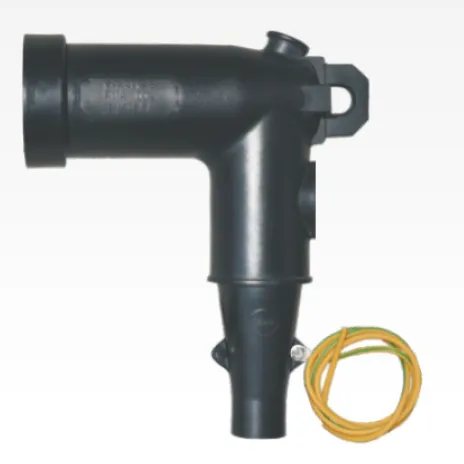
Integrating European cable accessories into local electrical systems is a task that demands careful planning, technical awareness, and a clear understanding of both European standards and local grid requirements. As global infrastructure projects expand and cross-border equipment sourcing becomes routine, engineering teams increasingly rely on European cable accessories to deliver reliable, high-voltage performance in diverse environments. Getting the integration right from the start saves time, reduces rework, and ensures long-term system safety.
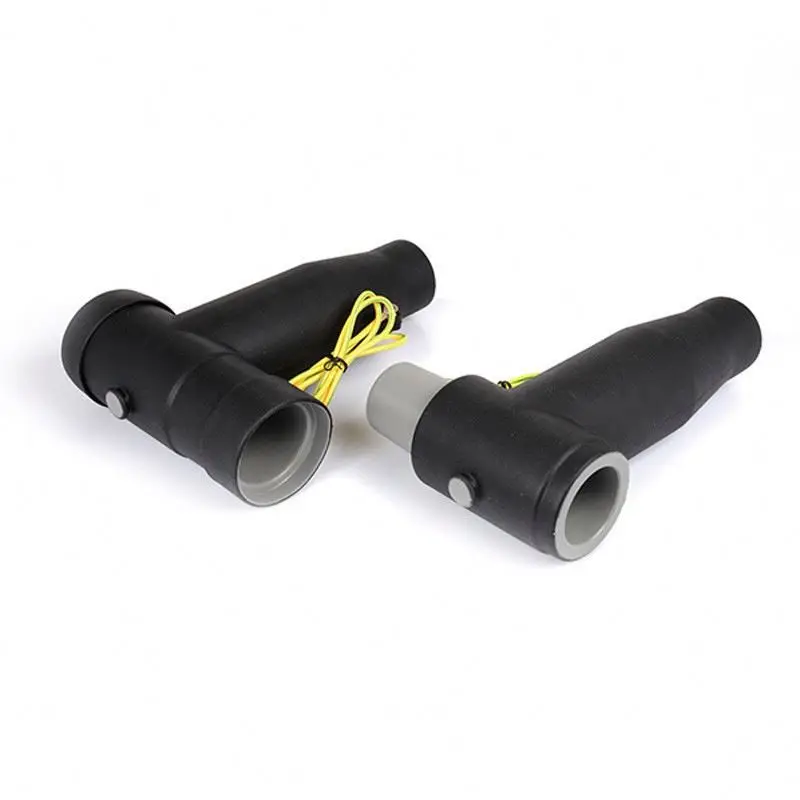
Whether you are working with a 10kV distribution network or a 15kV industrial substation, European cable accessories such as rear connectors, separable connectors, and silicone insulators follow dimensional and electrical standards that may differ from locally produced components. Understanding these differences and addressing them systematically is the foundation of a successful integration process. This guide walks through the essential steps engineers and procurement teams need to follow when introducing European cable accessories into existing or new local systems.
Understanding Standards and Compatibility Requirements
European Standards Versus Local Norms
The first step when working with European cable accessories is to clearly identify the governing standards behind each component. European cable accessories are typically designed to comply with IEC 60502, EN 50393, or equivalent CENELEC specifications. Local systems, depending on the region, may follow national variants, ANSI/IEEE standards, or adapted IEC editions. Before procurement, your engineering team should compare voltage ratings, current ratings, insulation class, and connector interface geometry between the European cable accessories under consideration and the local system's existing specifications.
European cable accessories such as elbow connectors and rear connectors follow interface geometries defined under the European standard for separable connectors. If your local system uses a different connector interface, an adapter sleeve or a transition bushing may be required. Always verify that such adapters maintain the full dielectric integrity of the European cable accessories being installed. Skipping this verification step is one of the most common sources of failure when integrating European cable accessories into legacy networks.
Voltage and Current Rating Alignment
European cable accessories are manufactured for specific voltage classes, commonly 12kV, 17.5kV, or 24kV system voltage. When integrating European cable accessories into a local system rated at 10kV or 15kV, confirm that the rated voltage of the European cable accessories meets or exceeds the local system's maximum voltage level, including transient overvoltages. Similarly, current ratings for European cable accessories must match or exceed the cable conductor cross-section and the expected continuous load current. A 630A-rated European rear connector, for example, is designed for high-demand feeder applications and must be paired with appropriately sized cable ends and termination hardware.
Preparing the Local System for Integration
Cable End Preparation and Interface Matching
Proper cable end preparation is critical when installing European cable accessories. European cable accessories rely on precise semiconductor screen cutback distances, insulation diameter tolerances, and conductor compression connections. Before installing European cable accessories, technicians must prepare cable ends strictly according to the accessory manufacturer's instructions, using the specified stripping dimensions and approved compression tools. Using incorrect crimp dies or wrong stripping lengths can compromise the interface between the cable insulation and the European cable accessories, leading to partial discharge or premature failure.
European cable accessories designed for screened cables require that the outer semiconductor layer be cut back to a defined length and that the cable insulation surface be polished to a specific smoothness. This is especially important for separable European cable accessories, where the plug-in interface must form a void-free contact with the silicone rubber body. Any contamination, moisture, or surface irregularity at the cable-accessory interface can reduce the effectiveness of European cable accessories and shorten service life.
Local Hardware and Enclosure Compatibility
Beyond the cable itself, local switchgear, ring main units, and transformer terminations must be physically compatible with the chosen European cable accessories. European cable accessories with rear-connector or T-body configurations require specific bushing stud dimensions and mounting flange arrangements. If local switchgear uses a different stud size or thread pitch, adapters must be sourced or custom fabricated. Always confirm enclosure IP ratings match the environmental demands of the installation site, since European cable accessories are rated for defined ingress protection levels that must be maintained after installation.
Installation Best Practices for European Cable Accessories
Assembly Sequence and Silicone Interface Care
Installing European cable accessories correctly requires following a defined assembly sequence. Most European cable accessories use a push-on or plug-in design where the silicone rubber interfaces self-seal under compression. Technicians should apply the lubricant or silicone grease supplied or recommended with the European cable accessories to all mating surfaces before assembly. Using unauthorized lubricants can degrade the silicone material of European cable accessories over time, causing swelling or reduced dielectric strength. The connector should be pushed fully home until the retention locking mechanism engages, confirming complete seating of the European cable accessories.
European cable accessories with earthing screens or shielding continuity requirements must have those screens connected per the system's earthing philosophy, whether single-point or cross-bonded. Incorrect screen bonding on European cable accessories can lead to circulating currents, sheath heating, or interference with protection relay systems. After installation, European cable accessories should be tested with a high-voltage withstand test and a partial discharge measurement to confirm that the installation meets the dielectric quality expected of European cable accessories.
Post-Installation Verification and Documentation
After physically installing European cable accessories, a structured verification process ensures long-term reliability. This includes recording the cable end preparation dimensions, the torque values applied to any bolted connections within the European cable accessories, and the test results from post-installation testing. Maintaining accurate records for European cable accessories installed in the field supports future maintenance planning and provides traceability if system faults arise. Many operators also perform thermal imaging surveys after energization to confirm that European cable accessories are operating within normal temperature ranges under load.
FAQ
Can European cable accessories be used directly with local cables without modification?
In many cases, European cable accessories can be used with locally sourced cables, provided the cable's insulation diameter, semiconductor layers, and voltage class align with the specifications of the European cable accessories. However, cable end preparation must strictly follow the instructions for the specific European cable accessories being installed, as dimensional tolerances are tightly controlled.
What is the most important check before installing European cable accessories on existing switchgear?
The most critical check is verifying that the bushing interface geometry and stud dimensions on the existing switchgear match the European cable accessories selected. European cable accessories follow standardized interface dimensions, but local switchgear may use different configurations that require transition adapters to maintain safe and reliable connectivity.
How should European cable accessories be tested after installation?
After installation, European cable accessories should undergo a high-voltage AC withstand test at the voltage level specified in the relevant IEC standard, followed by a partial discharge test to detect any voids or defects in the cable-accessory interface. These tests confirm that the European cable accessories have been assembled correctly and are ready for service energization.