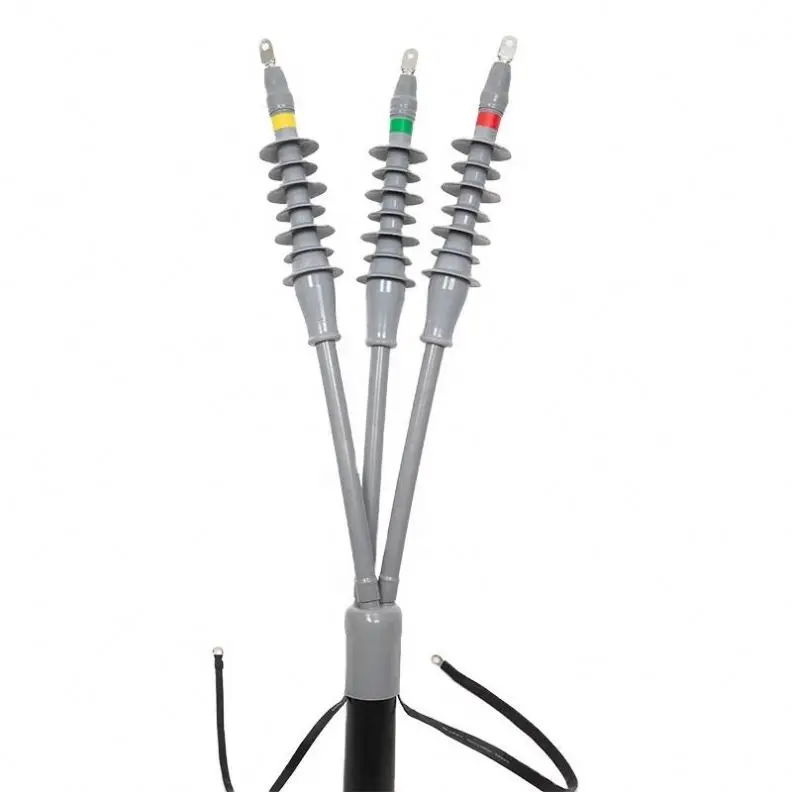
industrial cable joint
An industrial cable joint represents a critical connection point in electrical distribution systems, designed to safely unite two cable ends while maintaining electrical conductivity and mechanical strength. The industrial cable joint serves as an essential component in power transmission, renewable energy installations, and heavy industrial applications where reliable connections are paramount.
The primary function of an industrial cable joint is to restore the full electrical capacity of cables while ensuring complete insulation integrity. This industrial cable joint accomplishes this through advanced sealing technologies and durable materials that withstand extreme environmental conditions. Modern industrial cable joint designs incorporate heat-shrink tubing, specialized compounds, and reinforced sleeves that protect against moisture, corrosion, and thermal stress.
Key technological features of an industrial cable joint include superior dielectric strength, which prevents electrical breakdown, and exceptional mechanical resilience that handles cable movement and vibration. These features ensure that an industrial cable joint maintains performance across diverse applications, from underground installations to overhead transmission lines.
Applications for an industrial cable joint span multiple sectors. In manufacturing facilities, an industrial cable joint connects power distribution systems with machinery. In renewable energy projects, these joints link solar arrays and wind turbines to grid infrastructure. Telecommunications networks rely on industrial cable joint solutions for signal transmission reliability. Mining operations depend on robust industrial cable joint installations to power heavy equipment safely in challenging environments.

 EN