
 EN
EN
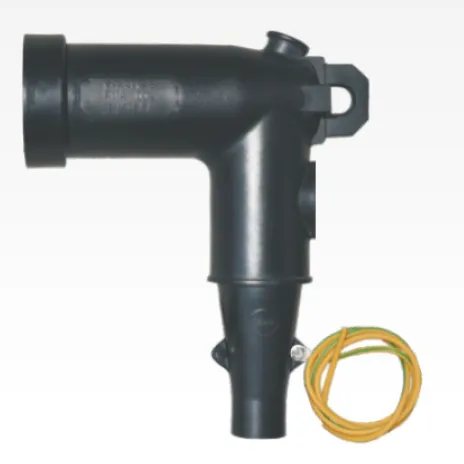
European-style cable accessories have become essential components in medium and high voltage power distribution systems across global markets, serving as critical interfaces between cables and electrical equipment. These accessories, which include cable connectors, separable connectors, cable terminations, and insulating components, must adhere to rigorous international standards to ensure operational safety, reliability, and interoperability. The International Electrotechnical Commission (IEC) standards represent the benchmark for electrical equipment performance worldwide, and understanding how European-style cable accessories meet these standards is crucial for electrical engineers, procurement specialists, and utility operators who specify and deploy these components in demanding power infrastructure applications.
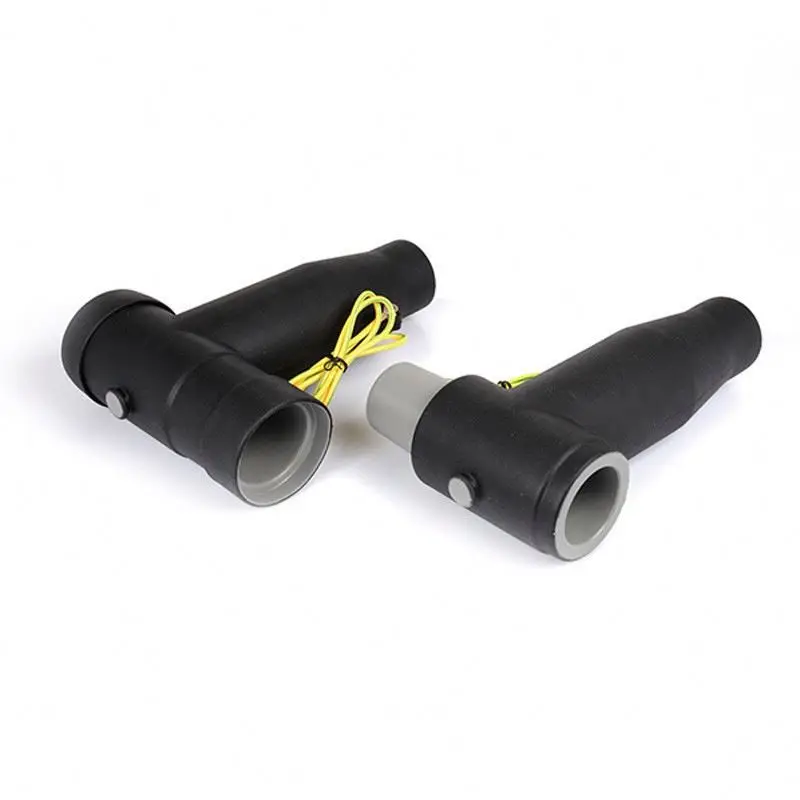
The compliance of European-style cable accessories with IEC standards involves a comprehensive framework that addresses electrical performance, mechanical durability, environmental resilience, and safety requirements. This alignment with international standards enables manufacturers to produce components that function reliably across diverse operating conditions while maintaining compatibility with equipment from multiple suppliers. The process through which these accessories achieve IEC compliance encompasses design principles rooted in decades of European engineering expertise, material selection that meets stringent dielectric and mechanical specifications, testing protocols that verify performance under extreme conditions, and quality assurance systems that ensure consistent manufacturing outcomes. For professionals responsible for power distribution infrastructure, understanding this compliance pathway provides essential knowledge for making informed specification decisions and ensuring long-term system reliability.
Design Philosophy Behind IEC-Compliant European-Style Cable Accessories
Integration of European Engineering Standards with IEC Framework
The design of European-style cable accessories reflects a harmonization between traditional European electrical engineering practices and the comprehensive requirements established by IEC standards. European manufacturers have historically maintained stringent design practices that emphasize safety, longevity, and performance under challenging conditions, creating a natural alignment with IEC objectives. When developing European-style cable accessories, engineering teams systematically incorporate IEC 60502 requirements for power cables, IEC 61442 standards for cable accessories rated above 1 kV, and IEC 60840 specifications for extruded insulation systems. This integration ensures that connector geometries, contact arrangements, insulation dimensions, and grounding provisions meet both regional expectations and international technical requirements.
The dimensional standardization inherent in European-style cable accessories facilitates this IEC compliance by establishing consistent interface specifications that manufacturers can reliably reproduce. Cable lug dimensions, conductor seating depths, insulation shield termination points, and mechanical interface tolerances are designed according to principles that satisfy IEC electrical clearance requirements and mechanical stress distribution criteria. European design philosophy emphasizes redundant safety features, such as dual-barrier insulation systems and integrated stress relief components, which exceed minimum IEC requirements and provide additional operational margins. This conservative approach to design creates accessories that not only meet baseline IEC standards but often surpass them in terms of safety factors and operational reliability.
Material Selection Aligned with IEC Dielectric and Environmental Requirements
Material choices for European-style cable accessories directly determine their ability to meet IEC performance standards across electrical, thermal, and environmental parameters. The insulating materials used in these accessories, typically silicone rubber or ethylene propylene rubber (EPR), are selected based on their dielectric strength characteristics as specified in IEC 60243 for electrical strength testing and IEC 62217 for polymeric insulating materials. Silicone rubber formulations used in European-style cable accessories demonstrate dielectric strength values exceeding 20 kV/mm, ensuring adequate electrical stress management in medium voltage applications while meeting IEC 60587 requirements for resistance to tracking and erosion. The hydrophobic properties of silicone materials provide superior performance in humid and contaminated environments, addressing IEC 60060 high-voltage testing standards that evaluate insulation performance under wet conditions.
Conductive components within European-style cable accessories are manufactured from copper alloys that meet IEC 60228 specifications for conductors of insulated cables, ensuring adequate current-carrying capacity and mechanical strength. Contact surfaces frequently incorporate silver or tin plating to reduce contact resistance and prevent oxidation, maintaining electrical performance throughout the accessory's service life as required by IEC 61238 standards for connecting devices. The elastomeric stress control materials integrated into connector designs utilize semi-conductive compounds formulated to provide controlled resistivity gradients that distribute electrical stress uniformly across insulation interfaces, a critical requirement verified through IEC 60840 partial discharge testing protocols. This comprehensive material selection process ensures that every component within European-style cable accessories contributes to overall IEC compliance.
Testing Protocols That Validate IEC Compliance
Electrical Performance Verification According to IEC Standards
The validation of European-style cable accessories against IEC standards requires extensive electrical performance testing that evaluates dielectric strength, partial discharge behavior, power frequency withstand capability, and impulse voltage resistance. Type testing protocols outlined in IEC 61442 mandate that cable accessories undergo power frequency voltage tests at levels significantly exceeding rated voltage, typically 2.5 to 3.5 times the rated value, applied for specified durations to verify insulation integrity. European-style cable accessories are subjected to these tests in both dry and wet conditions, with testing laboratories applying water spray or immersion protocols defined in IEC 60060-1 to simulate operational environments. Partial discharge testing, a critical evaluation method specified in IEC 60270, measures the magnitude and frequency of discharge events within the accessory under elevated voltage stress, with acceptance criteria requiring discharge levels below 10 picocoulombs at maximum operating voltage.
Impulse voltage testing represents another essential verification method for European-style cable accessories, assessing their ability to withstand transient overvoltages caused by lightning strikes or switching operations. IEC 60060-1 defines both lightning impulse (1.2/50 μs waveform) and switching impulse (250/2500 μs waveform) test procedures, with voltage levels determined by the equipment insulation coordination class. European manufacturers typically design accessories to withstand basic lightning impulse levels (BIL) appropriate for their voltage rating, such as 95 kV for 24 kV class equipment, with testing demonstrating no flashover or insulation failure. Temperature rise testing, specified in IEC 61238-1 for contact performance, verifies that current-carrying components within European-style cable accessories remain within acceptable temperature limits during continuous operation at rated current, ensuring long-term reliability and preventing premature aging of insulating materials.
Mechanical and Environmental Durability Assessment
Mechanical testing protocols for European-style cable accessories encompass a range of evaluations that verify structural integrity, dimensional stability, and resistance to installation stresses as outlined in various IEC standards. Pull-out force testing, defined in IEC 61238-1, measures the mechanical retention strength of cable-to-connector interfaces, ensuring that conductive joints maintain electrical continuity under mechanical stress conditions encountered during installation or thermal cycling. European-style cable accessories typically demonstrate pull-out resistance exceeding 1000 N for medium voltage applications, providing substantial safety margins beyond minimum IEC requirements. Flexural rigidity testing evaluates the accessory's ability to accommodate cable movement without mechanical failure or electrical performance degradation, a particularly important consideration for installations subject to vibration or thermal expansion.
Environmental testing validates that European-style cable accessories maintain performance across the temperature, humidity, and contamination conditions specified in IEC 60068 series standards. Thermal cycling tests expose assembled accessories to repeated temperature excursions between -40°C and +90°C, simulating decades of seasonal variations and verifying that differential thermal expansion between materials does not compromise electrical interfaces or insulation integrity. Salt fog testing according to IEC 60068-2-52 exposes external insulator surfaces to saline mist conditions that replicate coastal or industrial environments, assessing tracking resistance and surface degradation over extended exposure periods. UV resistance testing, particularly important for outdoor installations, subjects silicone insulator materials to accelerated weathering protocols that simulate years of solar radiation exposure, ensuring that mechanical properties and dielectric performance remain stable. These comprehensive environmental tests demonstrate that European-style cable accessories maintain IEC compliance throughout their intended service life.
Manufacturing Quality Systems Supporting IEC Compliance
Process Controls and Documentation Requirements
Manufacturing European-style cable accessories that consistently meet IEC standards requires rigorous quality management systems that control every aspect of production from raw material receipt through final inspection. ISO 9001 quality management principles form the foundation for these systems, with manufacturers implementing additional controls specific to electrical equipment production as outlined in IEC quality assurance guidelines. Material traceability systems track batches of silicone rubber, conductive alloys, and stress control compounds from qualified suppliers, maintaining documentation that links finished accessories to specific material lots with verified properties. This traceability enables manufacturers to demonstrate compliance with IEC material specifications and facilitates rapid response if any material-related quality issues emerge in field installations.
Critical manufacturing processes such as injection molding of insulating components, crimping of conductive joints, and assembly of multi-component accessories are subject to statistical process control methodologies that detect variations before they result in non-conforming products. Dimensional inspection protocols verify that molded insulators meet geometric tolerances essential for proper electrical clearances and mechanical interfaces, with coordinate measuring equipment providing objective verification against design specifications. Electrical testing of production batches includes high-potential (hipot) testing at voltages specified in IEC production testing guidelines, typically 80% of type test levels, ensuring that every European-style cable accessory leaving the factory demonstrates adequate dielectric strength. These production quality controls complement type testing by providing ongoing verification that manufacturing processes consistently produce IEC-compliant products.
Certification and Third-Party Verification Processes
Independent certification by recognized testing laboratories provides objective validation that European-style cable accessories meet IEC standards, offering procurement professionals and end users confidence in product performance. Notified bodies and testing institutes accredited to ISO/IEC 17025 standards conduct comprehensive type testing programs that evaluate accessories against applicable IEC specifications, issuing certificates that document compliance. Major European certification organizations such as KEMA, CESI, and independent laboratories in multiple countries maintain testing facilities equipped to perform the full range of electrical, mechanical, and environmental tests specified in IEC 61442 and related standards. Manufacturers of European-style cable accessories typically pursue certification for each product line and voltage class, maintaining current certificates as evidence of ongoing compliance.
The certification process extends beyond initial type testing to include factory inspections that verify manufacturing quality systems and periodic surveillance testing of production samples. These ongoing verification activities ensure that European-style cable accessories continue to meet IEC standards throughout their production lifecycle, not just during initial certification. Some certification schemes also require manufacturers to maintain design change control processes that necessitate re-evaluation whenever materials, processes, or designs are modified, preserving the integrity of the IEC compliance claim. For international projects and utility applications, these third-party certifications often represent mandatory requirements, making the investment in comprehensive IEC testing and certification essential for manufacturers seeking global market access for their European-style cable accessories.
Practical Implementation of IEC Standards in Real-World Applications
Installation Practices That Preserve IEC Compliance
The IEC compliance of European-style cable accessories extends beyond manufacturing to encompass proper installation practices that preserve the performance characteristics verified during testing. IEC 60502-4 provides guidance on test requirements for accessories for cables with extruded insulation, but practical installation procedures must translate these technical requirements into field practices. Manufacturers of European-style cable accessories provide detailed installation instructions that specify critical parameters such as conductor preparation dimensions, contact crimping forces, insulation interface overlap requirements, and torque specifications for mechanical fasteners. Adherence to these instructions ensures that installed accessories replicate the configurations tested for IEC compliance, maintaining the electrical clearances, contact resistances, and insulation integrity verified in laboratory conditions.
Training programs for installation personnel emphasize the importance of surface preparation, particularly for interfaces between cable insulation and accessory components where electrical stress concentration occurs. Proper cleaning and abrasion techniques remove semi-conductive screens and contaminants that could initiate partial discharge activity, directly impacting the long-term reliability predicted by IEC testing protocols. Environmental conditions during installation also affect ultimate performance, with temperature and humidity requirements specified to ensure that elastomeric materials achieve proper mechanical interfaces and adhesion. Field testing after installation, including partial discharge measurements and insulation resistance verification, provides confirmation that European-style cable accessories have been properly installed and continue to meet IEC performance standards in their operational configuration.
Long-Term Performance Monitoring and Standards Evolution
The relationship between European-style cable accessories and IEC standards continues throughout the operational life of power distribution systems, with field performance data informing both maintenance practices and standards evolution. Utilities and industrial facilities implementing condition monitoring programs collect operational data on installed accessories, tracking parameters such as partial discharge activity, thermal signatures detected through infrared imaging, and electrical performance trends over time. This field intelligence validates that European-style cable accessories maintain IEC-compliant performance under actual operating stresses, which often differ from standardized laboratory test conditions. Periodic inspection and testing programs, recommended by IEC 60270 for partial discharge measurement and IEC 60502 series for cable systems, enable operators to verify continued compliance and identify accessories requiring replacement before failure occurs.
The ongoing evolution of IEC standards reflects accumulated knowledge from field experience with European-style cable accessories and other power distribution components. Technical committees responsible for maintaining IEC 61442 and related standards incorporate lessons learned from field failures, technological advances in materials and manufacturing, and changing operational requirements driven by grid modernization initiatives. European manufacturers actively participate in these standards development processes, contributing technical expertise and test data that shape future requirements. This dynamic relationship ensures that new generations of European-style cable accessories continue to meet evolving IEC standards while incorporating innovations that enhance performance, sustainability, and ease of installation. For procurement professionals and system designers, understanding this standards evolution provides context for evaluating when accessories should be upgraded to incorporate latest design practices and compliance requirements.
FAQ
What are the main IEC standards that apply to European-style cable accessories?
The primary IEC standards governing European-style cable accessories include IEC 61442 for cable accessories rated above 1 kV up to 36 kV, which establishes general requirements and type testing protocols. IEC 60502 series standards apply to power cables and their accessories with extruded insulation for rated voltages from 1 kV up to 30 kV. Additional relevant standards include IEC 60840 for accessories for cables with extruded insulation rated above 30 kV up to 150 kV, IEC 60270 for partial discharge measurements, IEC 60060 for high-voltage testing techniques, IEC 61238 for compression and mechanical connectors, and IEC 60228 for conductor specifications. These standards collectively address electrical performance, mechanical properties, environmental resistance, and testing methodologies specific to cable accessories.
How do manufacturers verify that European-style cable accessories meet IEC standards?
Manufacturers verify IEC compliance through comprehensive type testing programs conducted by independent accredited laboratories. These programs include electrical tests such as power frequency withstand voltage testing, lightning and switching impulse testing, partial discharge measurements, and temperature rise testing at rated current. Mechanical testing evaluates pull-out forces, flexural properties, and dimensional stability. Environmental testing subjects accessories to thermal cycling, salt fog exposure, UV radiation, and humidity conditioning. Type tests are performed on representative samples, and successful completion results in certification documents. Manufacturers then implement production quality controls including routine electrical testing, dimensional inspection, and material verification to ensure ongoing compliance. Third-party surveillance audits and periodic retesting of production samples provide additional verification throughout the product lifecycle.
Can European-style cable accessories be used interchangeably with accessories from other regions if they meet IEC standards?
While IEC standards promote international interoperability, European-style cable accessories may not be directly interchangeable with accessories from other design traditions even when both meet IEC requirements. Physical interface dimensions, connection methods, and installation procedures can differ between regional design approaches despite meeting the same electrical performance standards. European-style accessories typically feature specific dimensional standards for elbow connectors, separable interfaces, and insulator profiles that may not match accessories designed to North American or other regional conventions. Successful interchangeability requires not only IEC electrical compliance but also mechanical compatibility, which depends on cable types, equipment interfaces, and system voltage classes. When specifying accessories for international projects, engineers should verify both IEC compliance and physical compatibility with existing system components, consulting manufacturer documentation and potentially conducting interface verification testing before large-scale deployment.
What advantages do European-style cable accessories offer in terms of IEC standards compliance?
European-style cable accessories offer several advantages related to IEC standards compliance, stemming from the historical alignment between European electrical engineering practices and IEC development processes. These accessories typically incorporate conservative design margins that exceed minimum IEC requirements, providing enhanced reliability and longer service life. The widespread use of silicone rubber insulation in European designs offers superior performance in the environmental testing protocols specified by IEC standards, particularly regarding tracking resistance, hydrophobicity, and UV stability. Modular design approaches common in European-style accessories facilitate testing and certification of component subassemblies, simplifying the verification process for complete systems. Additionally, the extensive field experience base with European-style accessories across diverse international markets provides substantial performance data that validates their long-term IEC compliance under real-world operating conditions. Manufacturing quality systems established by European producers often incorporate ISO and IEC quality standards as foundational requirements, supporting consistent compliance outcomes.
Table of Contents
- Design Philosophy Behind IEC-Compliant European-Style Cable Accessories
- Testing Protocols That Validate IEC Compliance
- Manufacturing Quality Systems Supporting IEC Compliance
- Practical Implementation of IEC Standards in Real-World Applications
-
FAQ
- What are the main IEC standards that apply to European-style cable accessories?
- How do manufacturers verify that European-style cable accessories meet IEC standards?
- Can European-style cable accessories be used interchangeably with accessories from other regions if they meet IEC standards?
- What advantages do European-style cable accessories offer in terms of IEC standards compliance?